When you embark on starting a business, it is essential to set up a billing system. Indeed, the invoice is an indispensable document whose primary function is to formally trace the transactions that take place during a sale or purchase of a product or service. However, its usefulness encompasses many other aspects. Discover the spotlight on the top 4 utilities attributed to this essential document.
Commercial utility of an invoice
As highlighted above, the invoice is primarily a document that governs a purchase or sale of goods or services. According to Articles L441-3 and L441-6 of the Commercial Code, every seller, in the course of their professional activity, is obliged to issue an invoice to their client upon completion of the commercial transaction. In this respect, it allows for the outlining of all the negotiation conditions of the said transaction. To formalize this aspect, the Ministry of Economy has defined rules that all invoices must comply with. Find the essence of this regulation on the Document Gratuit website. Additionally, a free invoice template, compliant with current requirements, is available for you to download and use at your convenience.
Accounting utility of the invoice
The billing process is a task whose importance in accounting is significant. In reality, it is from invoices that annual reports are established. Furthermore, the invoice serves as a supporting document for accounting entries. This is why accounting rules indicate that it must be retained for a minimum of 10 years. Depending on various uses, accounting differentiates between the “right” invoice, which is the one the client has paid, and the “credit” invoice, which represents a debt of the company to the client.
Legal utility of an invoice
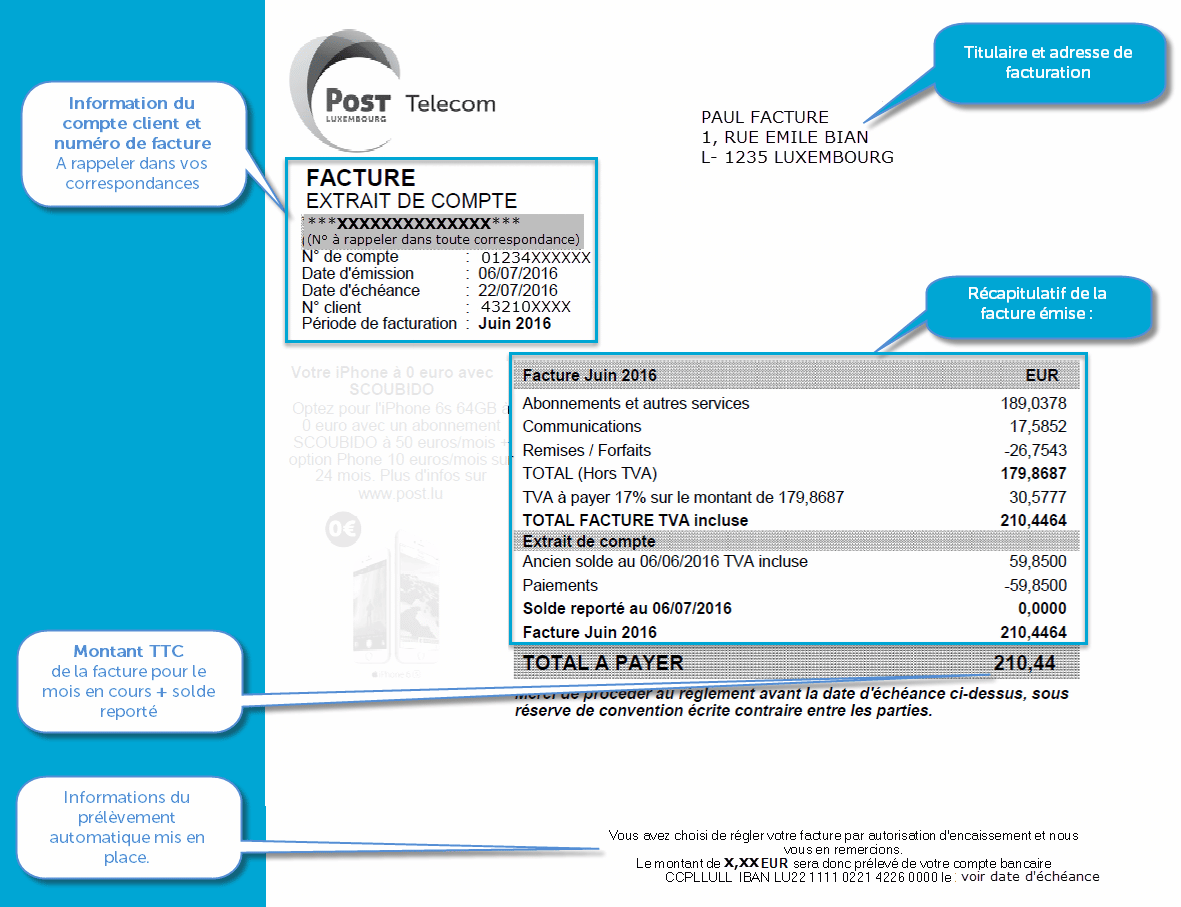
When drafting an invoice, at least two copies are made. Each of the contracting parties must keep a copy. Indeed, this is done to justify the transparency of the transaction and to anticipate any ambiguities or future disputes. In practice, the seller marks the invoice with “paid” to show that the payment has been made. From that moment, this invoice acquires legal value and can therefore be accepted as evidence in courts in case of a dispute. Additionally, it can serve in the context of business relationships and be used to receive financial aid and grants.
Tax utility of an invoice
The invoice finds its tax utility in that it allows for the calculation of tax. Whether it concerns value-added tax or corporate tax, the basis for calculation remains the invoice. Indeed, it is these invoices that trace all the collected VAT and thus facilitate their declaration to the competent authority. Similarly, during tax audits, it is the invoices that are scrutinized. This is necessary to verify the compliance of the tax declarations you have made in the past.