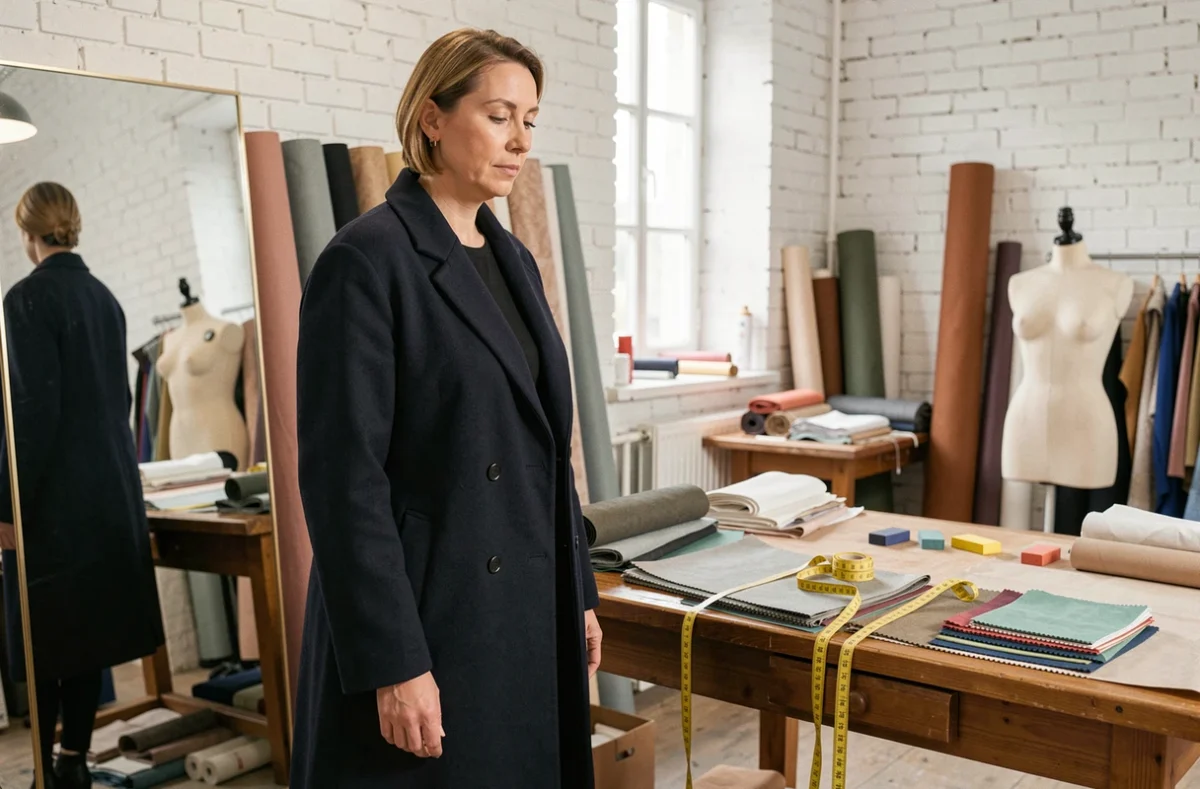
A coat bought online or found in a thrift store rarely fits your shape perfectly. Before reaching for a needle, the first question to ask isn’t “how many centimeters should I take in?” but “where is the excess fabric actually coming from?”
A coat may look too wide because the side seams have too much ease, but it could also be due to oversized shoulders, a poorly positioned armhole, or simply a style designed to be loose-fitting. Confusing these causes can lead to a botched alteration—or even a garment that can’t be salvaged.
Assess the fit before taking in the coat: identify the real source of the extra width
Put on the coat, button it up, stand with your arms at your sides, and look in a mirror. Check three specific areas: the shoulder seam, the waistline, and the armhole.
If the shoulder seam extends noticeably beyond your natural shoulder (past the bony point), the problem is the shoulder width, not the waist. On a structured jacket, narrowing the shoulders means taking apart the sleeve, shoulder pad, and lining. The result may create wrinkles or distort the way the coat hangs. If the shoulders are clearly too wide, it’s better to give up on this piece than attempt an unrealistic alteration.
If the shoulder seam sits in the right place but the fabric hangs loose around your ribs and waist, there really is excess width at the sides. This is the best-case scenario for taking in a coat.
Third scenario: the coat is intentionally loose-fitting (oversized cut, cocoon style). Taking it in means working against its original pattern. The proportions of the collar, pockets, and hem won’t match, and the result will look unbalanced. Recognizing a style designed to be roomy can save you from paying for an alteration that spoils the garment.
A detailed guide explains how to take in an oversized coat for each situation, with methods suited to the garment’s construction.
Taking in a coat at the side seams: technique and limitations
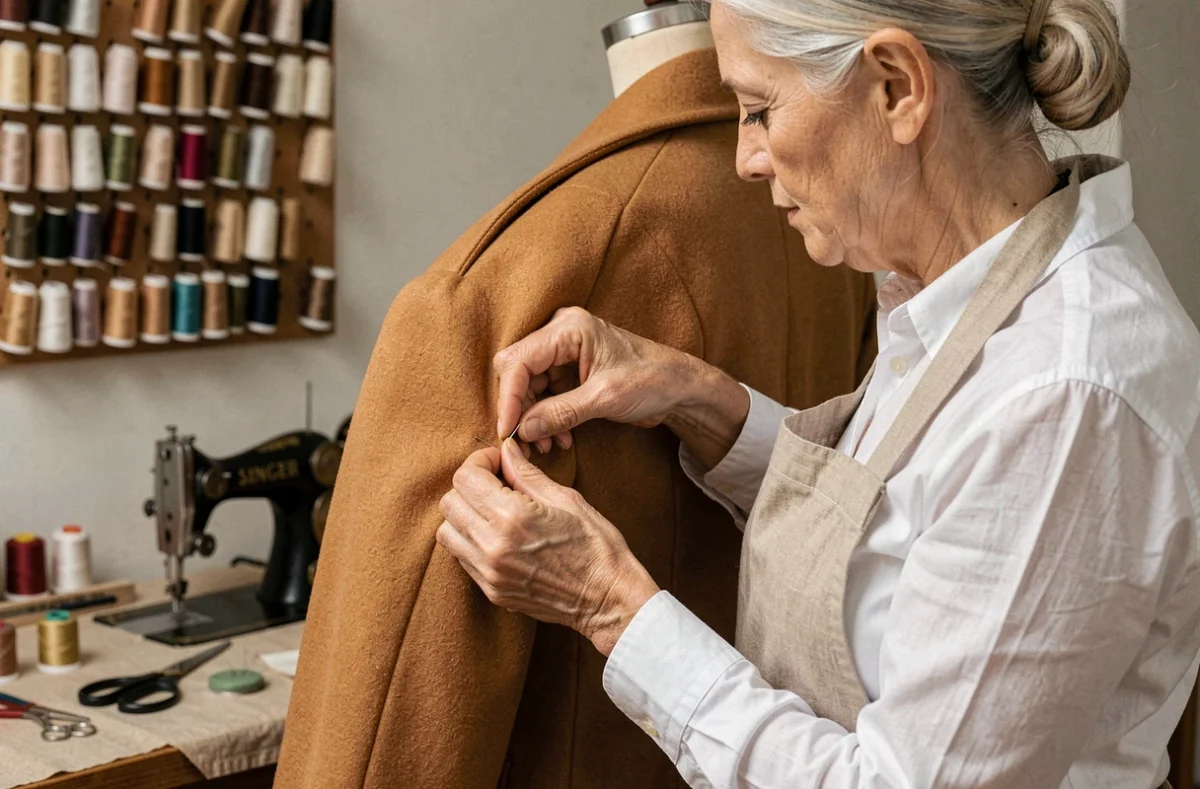
When your assessment confirms excess width at the sides, taking in the side seams is the most common method. The idea is to open the lining, pin the outer fabric along the side seams, then sew a new seam line closer to the body.
Steps for successfully taking in the side seams
- Turn the coat inside out and unpick the lining along the side seams for the full length of the bodice, from the armhole to the hips.
- Put the coat on inside out and pin the excess fabric, distributing the adjustment evenly on both sides. Never take it in on just one side, as this can shift the closure.
- Sew the new seam with a straight stitch, following the pins, then trim the excess fabric, leaving at least a one-centimeter seam allowance.
- Close the lining with slip stitches, or use a sewing machine if you can access the area.
The adjustment should be symmetrical and gradual. Taking in too much too abruptly creates an unsightly pinch at the waist. It’s better to mark a gentle curve from the underarm to the hip.
Have you noticed that a coat pulls at the buttons when you sit down after it’s been taken in? That’s a sign it was taken in too much around the stomach. Always leave at least two centimeters of ease when sitting.
Lined or structured coats: extra precautions
Lined or structured coats often need to be fitted and altered in a workshop to preserve the shape of the sleeves and the closure. Each layer of fabric must be taken in separately: the outer fabric first, then the lining. If you sew them together, the lining will pull and create air pockets.
For a coat made from thick wool, press each new seam open with an iron and a damp pressing cloth. Without this step, the seam allowance will form a ridge that’s visible from the outside.
Shaping darts: an alternative to taking in the side seams
Taking in the side seams isn’t always the best option. On a straight-cut coat that fits relatively well at the hips but hangs loose around the bodice, two darts in the back are often enough to restore its shape.
A dart is a triangular fold sewn into the fabric and placed vertically on the back, between the waist and shoulder blade. It removes excess fabric without altering the existing seams. This is a less extensive alteration and is easier to undo if you’re not happy with the result.
To position the darts, put on the coat and ask someone to pinch the fabric on your back, on either side of your spine. Mark the top and bottom points of each dart with tailor’s chalk. The widest part of each dart should be no more than three centimeters, or it may create puckering.

Professional alteration or DIY: how to decide
Why does this distinction matter? Because taking in a coat is an alteration for fit, not a repair. It isn’t covered by the Textile Repair Bonus, which applies only to repairs such as a split seam or damaged lining. Fit alterations remain the customer’s responsibility.
If your coat also has a torn lining or a broken zipper, ask for an estimate that clearly separates the repair (which may qualify for the bonus when done by an approved repairer) from the alteration to take it in (which you’ll pay for yourself).
When should you have a professional take in your coat instead of doing it yourself? Two situations clearly call for it:
- The coat is lined and structured with shoulder pads: taking apart and reassembling the lining, interfacing, and sleeves requires professional tailoring skills.
- The excess width also affects the shoulders or armholes: altering an armhole changes the entire hang of the coat, and mistakes are difficult to fix.
- The fabric is delicate (silk, cashmere, fine wool cloth): every needle hole is permanent, so there’s no room for error.
By contrast, an unlined coat in standard wool fabric with only a little extra width at the sides can be taken in at home with a regular sewing machine and a few hours of patience. The key is the initial assessment: if the excess width really is at the sides and the shoulders sit in the right place, you can handle the alteration yourself.