Choosing on-trend clothing is less about blindly following the runway than about applying a technical framework: fabrics, proportions, color palette and wardrobe cohesion. Choosing on-trend clothes to express your everyday style means mastering a few trade-offs that general guides tend to overlook.
Fabric weight, drape and finishing: the textile details that make all the difference
A trendy garment that doesn’t last through two washes doesn’t make much of a statement. Before considering the cut or color, the fabric determines how long a piece will last and how comfortable it will be for everyday wear.
A fabric’s drape depends directly on its weight and composition. A jersey that’s too lightweight will warp after a few wears, while a sufficiently dense interlock knit will hold its shape. For flowing trousers or a straight-cut dress, a crepe with a moderate percentage of elastane maintains its shape without clinging.
Checking the fabric’s density and the quality of the stitching before buying is still the most worthwhile habit. Even topstitching, seam allowances of at least one centimeter and cross-stitched buttons: these details distinguish a durable piece from a disposable one. The repair bonus, available through QualiRépar-certified repairers, can also extend the life of a favorite garment instead of replacing it every time trends change.
Online catalogs make this harder to check. We recommend always looking at the garment’s exact measurements (chest width, back length) and the return policy before ordering, rather than buying multiple sizes. On vetement-mode.biz, product pages generally list these measurements, helping you avoid unpleasant surprises.

Color palette and clothing style: creating a cohesive look
Color is the first thing the eye picks up. Used poorly, it can turn a trendy outfit into a mismatched jumble.
Build a core palette of neutral shades
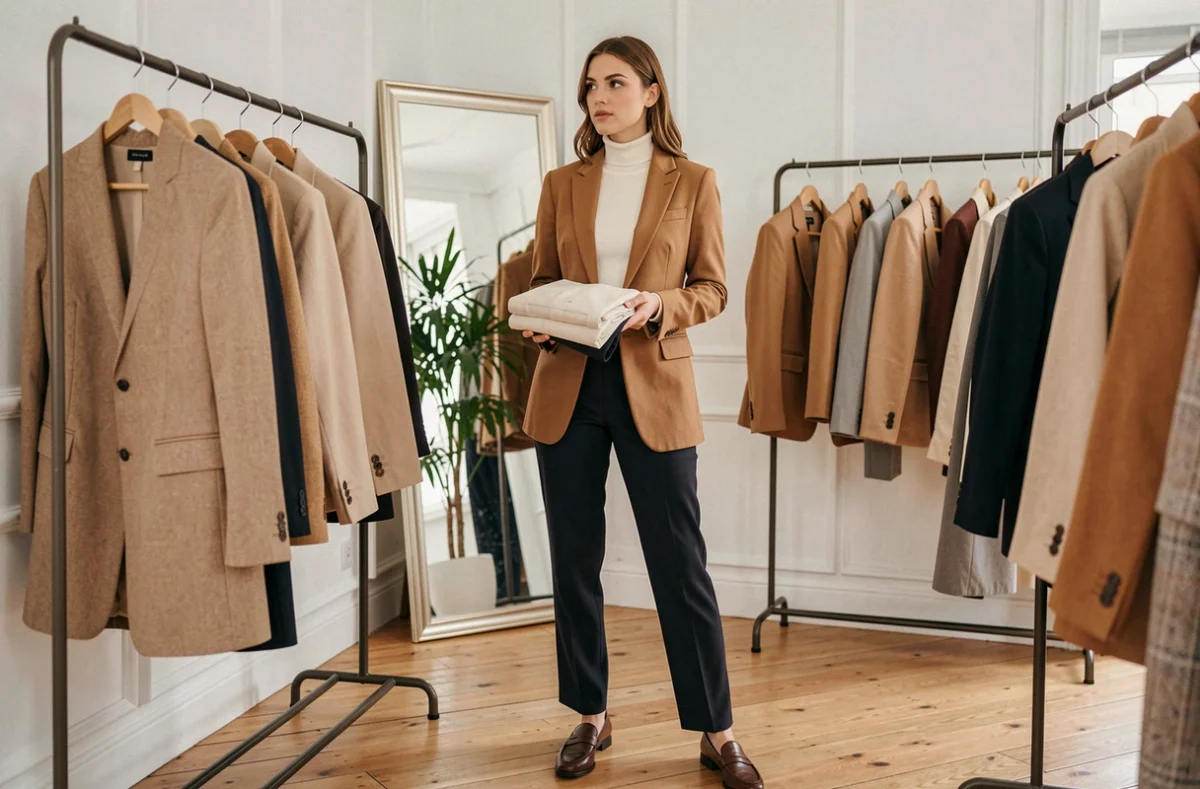
A cohesive wardrobe starts with three or four neutral colors that work together effortlessly: black, off-white, heather gray, navy and beige. These shades provide a base for seasonal colors.
A core palette of four neutrals works for most everyday outfits. Trousers, a jacket, a basic T-shirt: when these pieces share the same color palette, every colorful addition (a mustard bag, a terracotta scarf) creates a clear contrast.
Add seasonal shades without throwing your wardrobe off balance
Each season brings new color palettes. A common mistake is buying several statement pieces in the color of the moment, only for them all to look dated at the same time.
- Limit trendy color purchases to one or two pieces per season, preferably accessories (a bag, belt or scarf) that are easy to put away later
- Choose wardrobe staples (a coat, blazer or trousers) in timeless shades to get more years of wear from your investment
- Try a bold shade in a small dose first (socks, jewelry) before wearing it in a key piece
This approach prevents a buildup of trendy pieces that don’t go with anything else in your wardrobe.
Cuts and proportions: flatter your silhouette without chasing every micro-trend
Fit matters more than a garment’s pattern or brand. A cut that suits your body shape makes any basic piece look more elegant than a trendy piece that fits poorly.
Micro-trends in cuts (extreme oversized fits, crop tops, ultra-low rises) come and go quickly. Building your style around consistent proportions gives you a visual anchor that seasonal variations can simply add nuance to.
The balance between top length and bottom rise
The most reliable principle of proportion is to balance volume. A loose top calls for a fitted bottom, and vice versa. Wearing wide-leg trousers with an oversized sweater can hide your silhouette unless you define the waist with a belt or tuck in the fabric.
With a dress, the focus shifts to the relationship between the shoulder line and the hem. A flowing midi dress works best with well-defined shoulders (the shoulder seam should sit in the right place, with no excessively dropped sleeves).
Alterations and adjustments: an underused option
Having a garment altered often costs less than buying a new one. Shortening trousers, taking in a jacket or adjusting a dress at the waist can turn an average piece into one that fits perfectly.
The QualiRépar scheme mentioned above also covers some alterations to textiles and shoes, helping reduce the cost. Thinking in terms of total cost (purchase price plus alterations) changes how you choose on-trend clothes.
Secondhand fashion and personal style: a shopping strategy in its own right
Secondhand shopping is no longer just a budget-friendly choice. Sales of pre-owned clothing by professional retailers have surged in recent years, a sign that the market is becoming more established and the quality of the selection is improving.
Looking for trendy pieces in thrift stores or on specialist platforms can give you access to cuts and fabrics that are sometimes better than what new clothes offer at the same price. A wool blazer from a high-end ready-to-wear brand, resold for a fraction of its original price, offers more structure and durability than a comparable new piece at an entry-level price.
- Check the condition of the seams, fastenings and fabric (pilling, fading) before buying
- Compare the secondhand garment’s measurements with those of a similar piece you already own that fits well
- Choose platforms that offer quality checks or a money-back guarantee
Mixing new and secondhand pieces in the same wardrobe gives you access to a wider range of styles and textures without encouraging impulse buying. The result: a more personal wardrobe, less shaped by current collections.
Expressing your style every day isn’t about accumulating trendy clothes, but about choosing fabrics carefully, keeping your colors cohesive and paying attention to proportions. A streamlined wardrobe built around well-cut, well-maintained pieces carries you through the seasons with more confidence than a closet full of ill-fitting impulse buys.