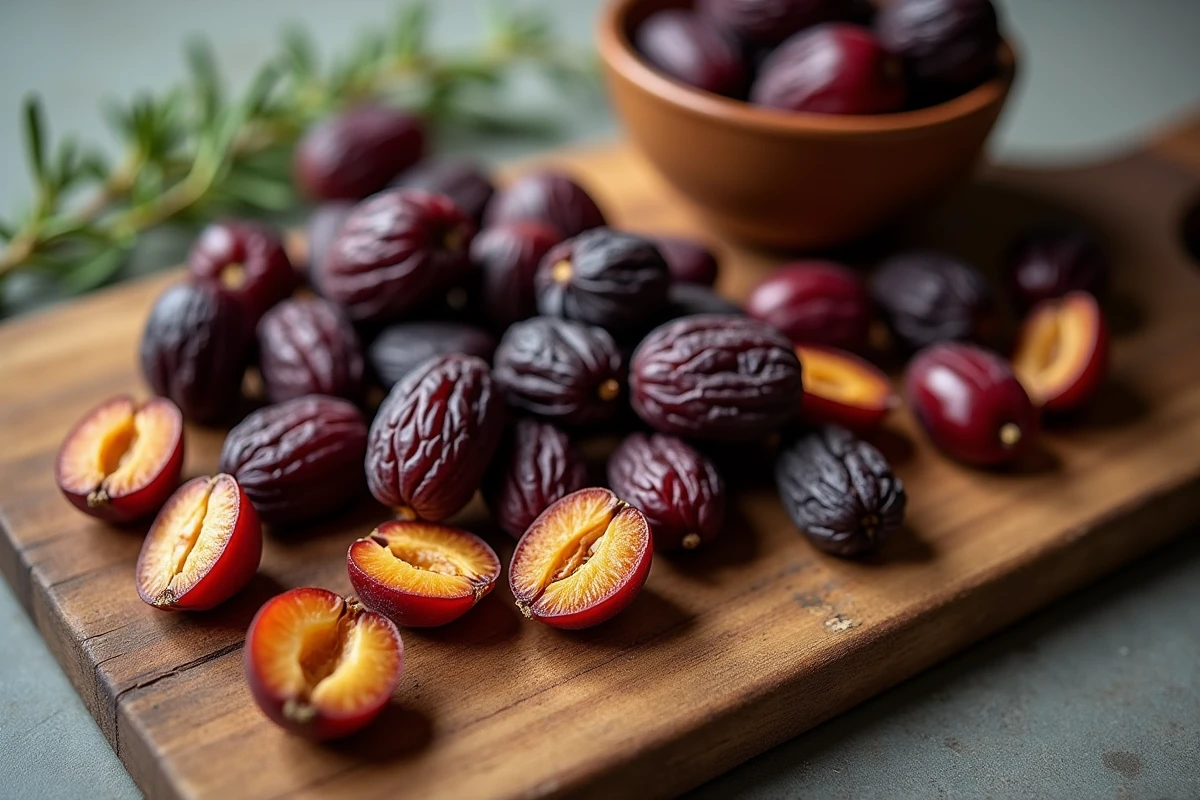
The prune is a dried Ente plum, whose residual moisture content determines its texture and nutritional properties. Consumed as is or incorporated into a cooked preparation, it behaves differently in the body. The difference lies in the structure of its fibers, its glycemic response, and the preservation of certain heat-sensitive micronutrients.
Understanding what changes between a raw prune and a cooked prune allows one to choose the consumption method that suits their needs, whether it concerns transit, bone health, or sugar management.
Fibers and the matrix of the prune: what cooking modifies
The prune contains both soluble fibers (pectins) and insoluble fibers. Soluble fibers form a gel when in contact with water in the digestive tract, which slows down sugar absorption. Insoluble fibers speed up intestinal transit by increasing the bulk of the food mass.
When a prune is consumed whole, at room temperature, its matrix remains intact. Chewing gradually releases the nutrients. Sorbitol, a naturally occurring sugar alcohol, exerts a gentle laxative effect without irritating the mucosa.
Prolonged cooking, on the other hand, disrupts this matrix. The fibers fragment, and the pectin gel loses some of its ability to slow carbohydrate absorption. An article detailing the benefits and drawbacks of prunes reminds us that this fruit remains nutritionally dense in both cases, but the preparation method influences the body’s response.
In practice, a long-simmered prune compote retains the fibers, but their glycemic regulation action decreases compared to a whole prune eaten as is.

Glycemic index of raw or cooked prunes: a measurable difference
Research in nutrition conducted notably at the University of Toronto and the University of Sydney indicates that the more a fruit is cooked and blended, the higher its glycemic response increases, with an equivalent amount of carbohydrates. The disruption of the fibers and the fruit’s matrix explains this phenomenon.
Applied to prunes, the principle translates simply: a whole prune, chewed slowly, causes a more gradual rise in blood sugar than a prune incorporated into a sweet dessert baked for an hour.
Consequences for satiety
Satiety partly depends on the speed of carbohydrate absorption. A raw prune, with its intact matrix, maintains the feeling of fullness longer. Two to three prunes as a snack are enough to curb a craving, making it a natural appetite suppressant effective between meals.
Incorporated into a Breton cake or a tagine, the prune remains tasty, but its satiety power decreases. Added sugar in the recipe worsens the overall glycemic rise of the dish.
Prunes and bone density: why the raw form dominates studies
A study published in Advances in Nutrition in 2022, focusing on postmenopausal women, shows that a daily consumption of whole prunes (not heated, at room temperature) is associated with a slowing of mineral bone density loss. Bone remodeling markers improve in the tested groups.
The notable point: these results pertain to prunes consumed raw. The authors emphasize that heat can degrade some of the phenolic compounds and vitamin K involved in the protective mechanism. No comparable study has been conducted on long-cooked prunes.
To gain bone benefits, it is therefore better to prioritize the prune as is, added to yogurt or eaten alone, rather than incorporated into a baked preparation.
Recipes adapted according to nutritional goals
The choice between raw and cooked is not a dogma. It depends on what one seeks to achieve.
When to prioritize raw prunes
- As a snack to regulate appetite: two to three whole prunes with a handful of almonds provide fiber, potassium, and magnesium without a glycemic spike
- In muesli or yogurt in the morning, to benefit from the intact matrix and sorbitol that supports transit
- In cases of chronic constipation, paired with a glass of water, to maximize the effect of soluble and insoluble fibers
When cooking brings a real advantage
- In a tagine or a sweet-salty dish, where the prune melts into the sauce and adds an aromatic depth impossible to achieve raw
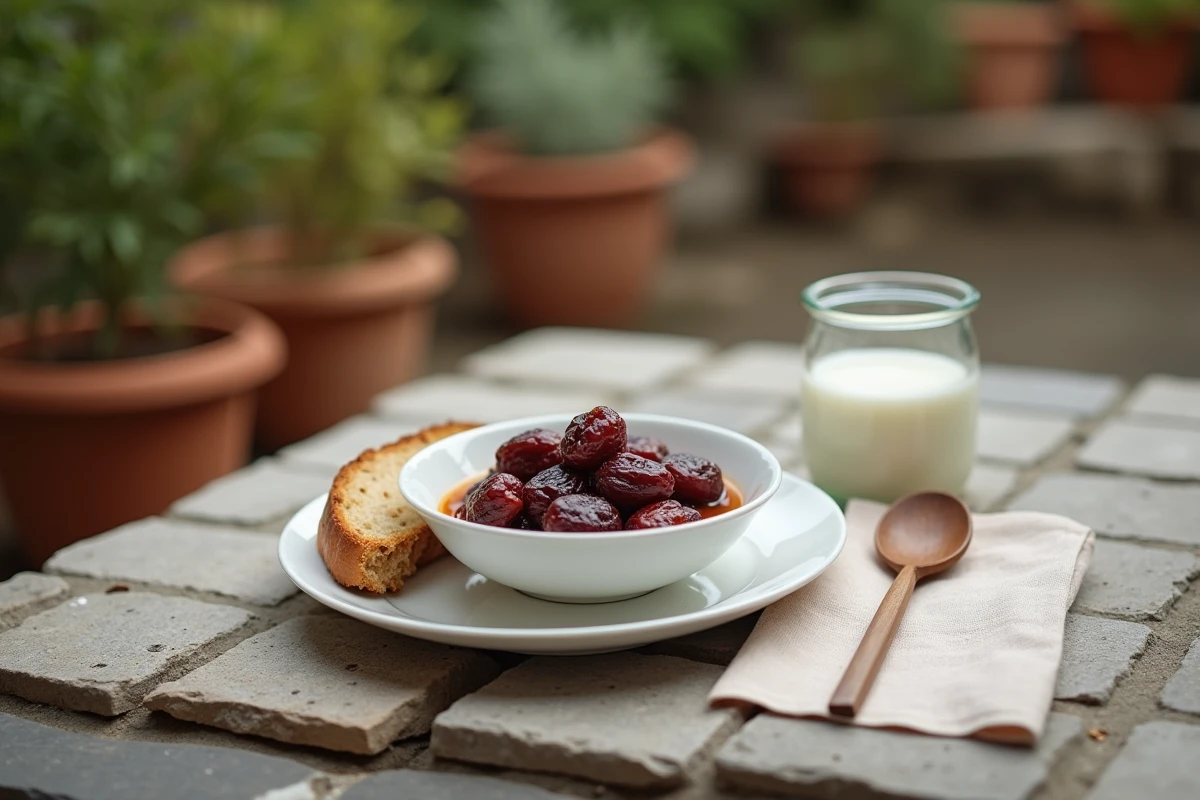
- In quick compote (short cooking, no added sugar) for those who have difficulty digesting whole dried fruits or have intestines sensitive to raw fibers
- In a cake or gingerbread, where the soft texture of cooked prunes partially replaces refined sugar
Short cooking (less than twenty minutes) preserves nutrients better than long baking. A gently simmered tagine remains a good compromise between taste pleasure and nutritional value.
Precautions to keep in mind
The prune remains rich in natural sugars. Excessive consumption, whether raw or cooked, can cause bloating and intestinal discomfort, especially in individuals sensitive to sorbitol. Four to six prunes per day is a reasonable guideline for most adults.
People on anticoagulant treatment should consider the vitamin K content of prunes, which is involved in the coagulation process. Medical advice is necessary in case of doubt.
The raw prune retains the nutritional advantage over most measured criteria: transit, satiety, glycemia, bone health. Cooking does not ruin it, but it diminishes several of its benefits. Reserving cooked recipes for dishes where the flavor of the prune truly transforms the result, and keeping the habit of eating whole prunes for daily consumption, remains the most coherent strategy.