
Between a lightweight battery-powered telescopic hedge trimmer and a thermal pole model capable of tackling an old privet hedge, the performance and comfort gaps are considerable. This article measures the parameters that truly make a difference at the time of purchase: weight of the cutting head, battery compatibility, effective reach, and compliance with European safety standards.
Telescopic hedge trimmer: weight, reach, and power source compared
The table below summarizes the discriminating criteria among the three main families of telescopic hedge trimmers available on the market. The data reflects trends observed among major manufacturers (Stihl, Husqvarna, Makita, Bosch, Einhell).
| Criterion | Battery (36 V and above) | Corded electric | Thermal pole |
|---|---|---|---|
| Average total weight | Medium to high (battery included) | The lightest of the three | The heaviest |
| Reach with pole | Up to 3 m and more depending on the model | Variable, limited by the cable | Comparable to battery models |
| Runtime | Depends on battery capacity (often 20-40 min in continuous use) | Unlimited (mains) | Unlimited (tank) |
| Noise | Low to moderate | Low | High (noise regulation applicable) |
| Multi-tool compatibility | Frequent (pole pruner, brush cutter) | Rare | Rare |
| Engine maintenance | Almost none | Almost none | Regular (spark plug, filter, fuel) |
Several data points from this comparison deserve closer examination, as the gaps between columns do not always tell the same story depending on the type of hedge to be maintained.
Recent models focused on product sheets from taille-haie-telescopique.com confirm this trend towards battery power, which now concentrates the majority of new catalog offerings from major brands.
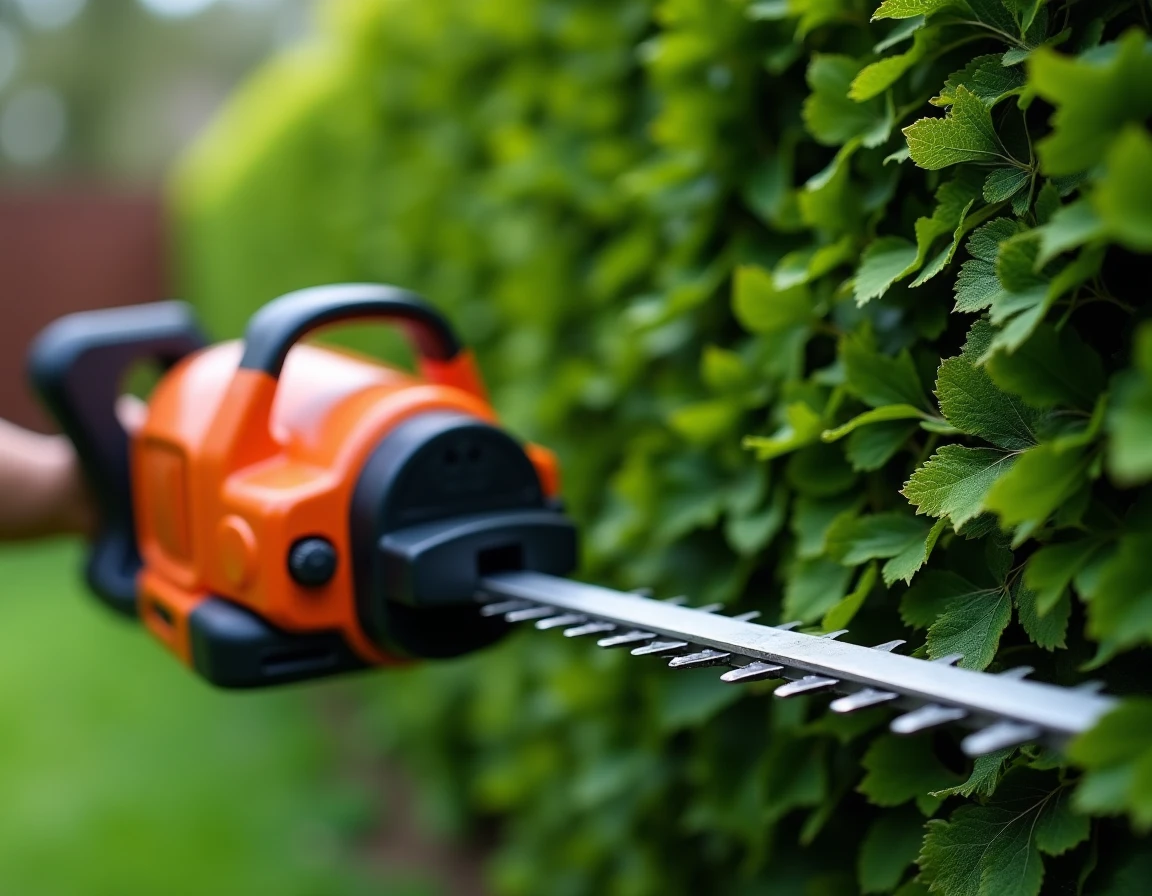
Multi-tool battery: the strategic purchasing criterion for a telescopic hedge trimmer
Since 2023-2024, manufacturers like Stihl (with the HLA 86 and other 36 V models) are directing their high-end telescopic hedge trimmers towards multi-tool compatible battery systems. Specifically, the same battery powers the hedge trimmer pole, the brush cutter, and the pole pruner.
This point transforms the economic calculation. Buying a standalone battery-powered telescopic hedge trimmer is more expensive than a corded model. However, if the battery is used for three or four tools, the cost per tool drops significantly. The choice of battery type then becomes a strategic criterion in the medium term, not just a technical detail.
On the other hand, not all battery ecosystems are equal. Compatibility between ranges from the same manufacturer is not always guaranteed (sometimes “garden” ranges and “pro” ranges are compartmentalized). Checking the exact battery reference before purchase avoids unpleasant surprises.
Actual runtime in cutting situations
The runtime advertised by manufacturers rarely corresponds to intensive use on dense hedges. An old laurel or thuja hedge puts more strain on the motor than a young hornbeam hedge. Effective runtime varies greatly depending on branch thickness and cutting frequency.
Users who trim two to three times per season (recommended frequency for a neat hedge) consume less battery per session than a single annual cut on very dense vegetation. This parameter weighs as much as the amp-hour capacity of the battery itself.
Weight of the cutting head and musculoskeletal disorders
Field reports from professional gardeners published by green space equipment cooperatives in 2024 indicate a notable increase in musculoskeletal disorders when the cutting head exceeds a certain weight threshold. The critical threshold is around 3 kg for the upper part of the device.
This data changes the usual reading grid. A more powerful model, but with a cutting head that adds weight beyond this threshold, becomes counterproductive for hedges over 3 meters high. With arms raised and extended, the extra weight results in fatigue and injury risk.
Several professional buyers now prefer slightly less powerful but better-balanced models. For an individual, the logic is the same: it is better to have a moderately long blade and a contained weight than oversized cutting capacity that makes the tool cumbersome to handle after twenty minutes.
Ergonomic check points before purchase
- The weight distribution between the main handle and the cutting head: a good telescopic hedge trimmer places its center of gravity near the handle, not at the end of the pole
- The presence of a harness or a strap attachment point, which transfers some of the weight to the shoulders and torso rather than solely on the wrists
- The angle of the cutting head adjustable without tools: being able to orient the blade without loosening screws reduces the time spent with arms raised and limits awkward postures
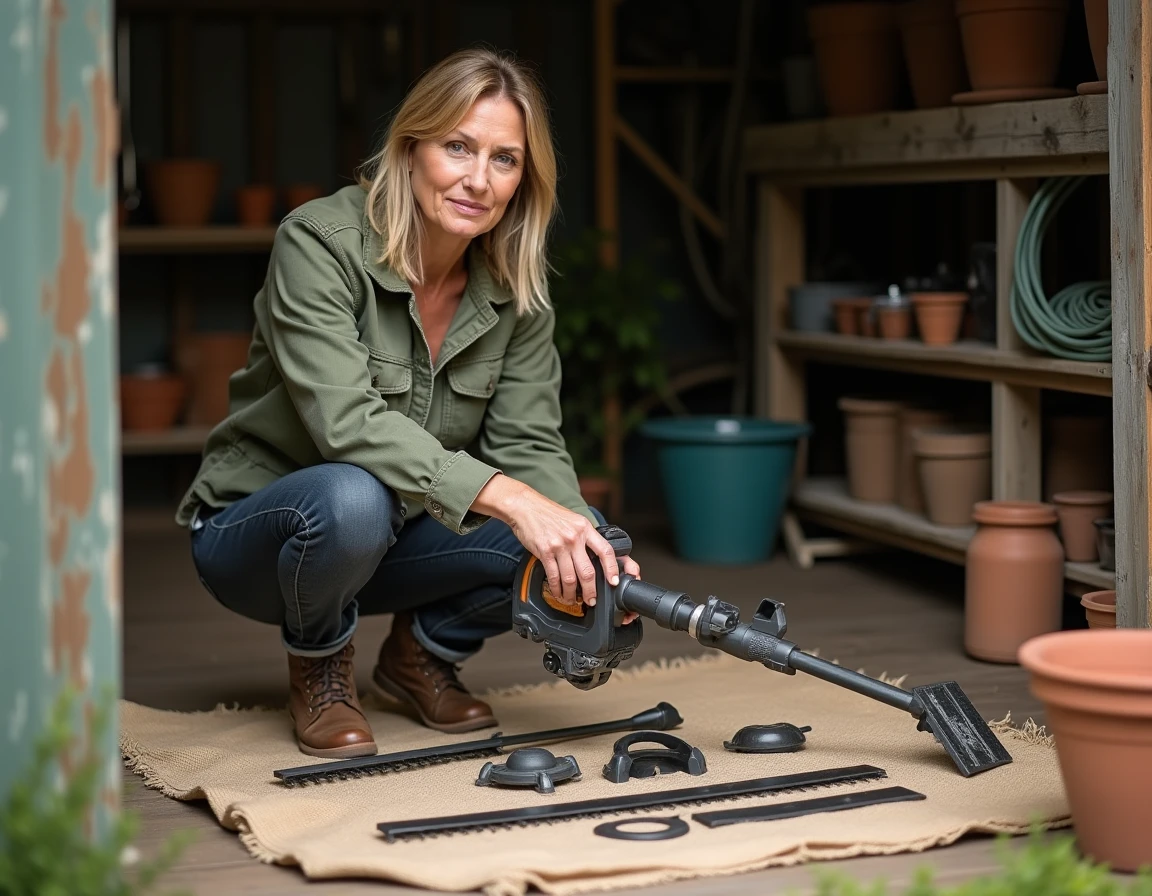
EN ISO 11680-1 standard and safety of telescopic hedge trimmers
The European standard EN ISO 11680-1, harmonized in the Official Journal of the EU in 2023, imposes specific safety devices on pole and telescopic hedge trimmers. These requirements do not systematically apply to traditional fixed-handle hedge trimmers.
Among the obligations: a minimum distance between handles, enhanced blade protection, and automatic return controls. These constraints have a direct impact on the weight and ergonomics of recent models, which partly explains why some telescopic hedge trimmers seem heavier than expected.
A model compliant with this standard ensures that the blade stops as soon as the user releases the trigger. This detail is not trivial when working at height, with arms extended, and with a reduced field of vision due to vegetation.
Trimming period and regulations
The French Office for Biodiversity strongly encourages individuals to avoid trimming and pruning hedges from March 15 to July 31, during the bird nesting period. This recommendation also guides the purchasing calendar: the useful trimming window focuses on late summer and autumn.
- Training cut (young hedges): late summer, when growth slows
- Maintenance cut (established hedges): September-October and possibly late winter before the vegetative restart
- Severe reduction (old or invasive hedges): November to February, outside of frost, to limit stress on the plant and respect wildlife
Choosing a telescopic hedge trimmer suited to the height and density of one’s hedge remains the most structuring decision. The type of power source conditions the long-term budget, especially if the battery is used for multiple tools.
The weight of the cutting head determines the actual comfort of use, and compliance with the EN ISO 11680-1 standard sets the safety baseline. These three parameters, crossed with the trimming calendar imposed by wildlife protection, are sufficient to eliminate the majority of unsuitable models.