Packaging a fragile sculpture for shipping presents a problem that classic guides for packing fragile items rarely address: irregular geometry. A vase or a painting fits into a rectangular box. A sculpture with an outstretched arm, an offset base, or a suspended shape does not fit into any standard format. The question then becomes less about “which material to choose” and more about “how to stabilize an object whose center of gravity is not in the middle of the package.”
Center of Gravity and Contact Points: What Changes for an Asymmetrical Sculpture
Before choosing a box or foam, the first step is to identify the contact points between the sculpture and its future container. A piece with an integrated base rests on a stable foundation, but the rest of the work may lean, create an overhang, or concentrate weight on one side of the package.
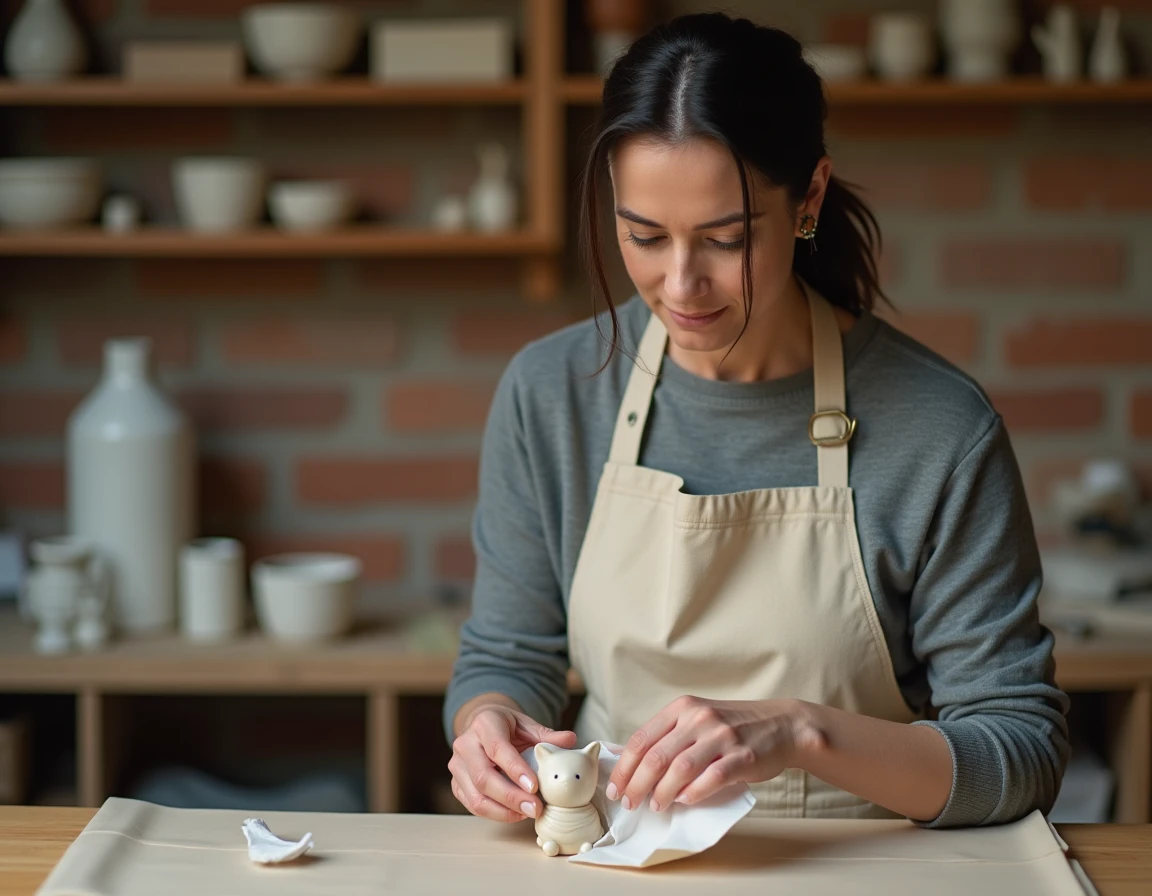
For asymmetrical sculptures, it is essential to identify the heaviest areas and the most protruding areas. These two sets do not always coincide. A ceramic figurine with an outstretched arm, for example, concentrates its mass in the center but presents its maximum fragility point at the end of the limb.
The most reliable approach is to create a custom cradle from cut foam, conforming to the exact shape of the sculpture. Several artisans and galleries use closed-cell polyethylene foam cut with a knife, which does not crumble and does not release particles when in contact with painted or varnished surfaces. This cradle must immobilize the sculpture without applying pressure to the fragile parts.
Learning how to ship a fragile sculpture with 100,000 Watts helps understand the principle of individualized packing, applicable to both figurines and large pieces.
Packing Fragile Sculptures: Comparison of Protective Materials
Not all packing materials are equal depending on the type of sculpture. The table below contrasts common solutions based on concrete criteria.
| Material | Shock Absorption | Adaptation to Irregular Shapes | Risk to Surfaces |
|---|---|---|---|
| Bubble Wrap | Good for light shocks | Poor (does not maintain shape) | Can leave marks on fresh varnish |
| Cut Polyethylene Foam | Very good | Excellent (custom size) | Neutral, no residue |
| Silk Paper + Cotton | Moderate | Average (fills voids without structural support) | Safe for sensitive surfaces |
| Air Cushions | Good for filling | Average (slide inside the box) | No direct contact recommended |
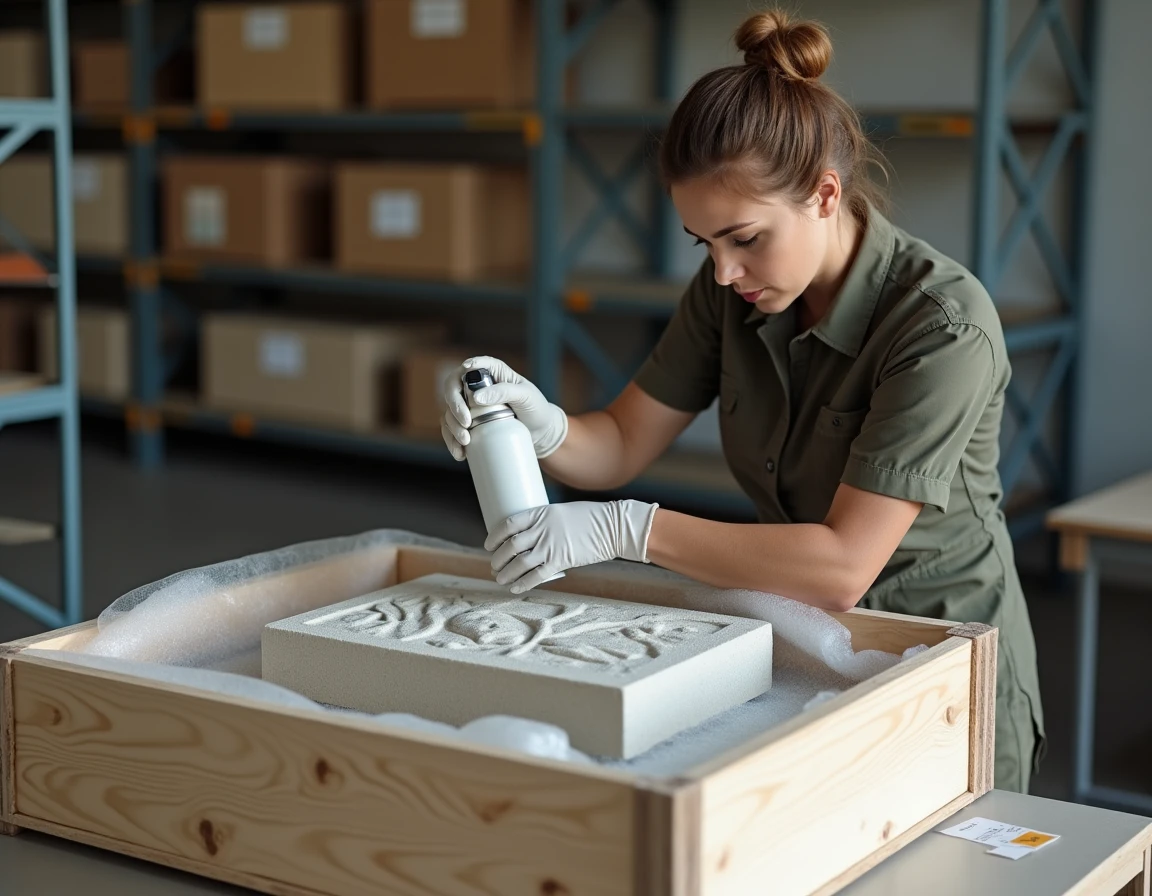
| In Situ Expanding Foam | Excellent | Perfect (conforms to any volume) | Requires a separating film, otherwise adheres |
Bubble wrap remains the most common reflex, but it does not keep the sculpture in position inside the box. For an asymmetrical piece, it is necessary to combine a rigid packing material (cut foam or expanding foam) with a soft cushioning material (bubble wrap or air cushions) around the perimeter.
Sculptures with Integrated Bases: Stabilize Before Packing
An integrated base represents both an advantage and a trap. The advantage is a flat base that facilitates positioning in the box. The trap is that the junction between the base and the sculpture itself often constitutes the most likely breaking point during transport.
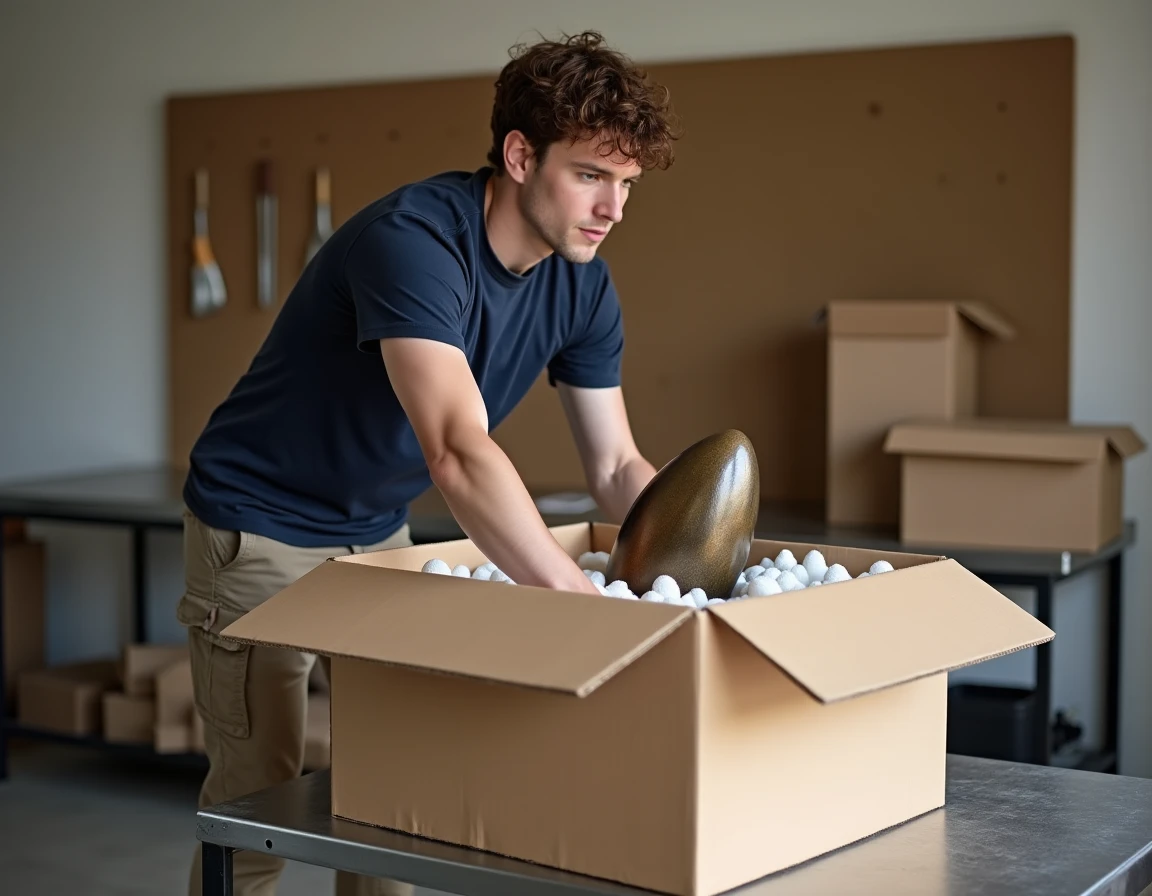
The technique is to treat the base and the sculpture as two distinct elements to be protected together. The base must be secured to the bottom of the box, ideally by a block of foam cut to its exact shape. The sculpture above then receives its own packing, independent of that of the base.
For metal pieces, the issue differs. The packaging should focus less on cushioning and more on structural stability and limiting movement inside the package. A stainless steel sculpture will not break under moderate impact, but it can scratch all surfaces around it if it moves.
Common Mistake: The Oversized Box
Choosing an oversized box “to have some margin” increases the risk. The larger the empty space, the more the sculpture can gain speed inside the package in case of a fall or jolt. The goal is a consistent packing space of a few centimeters on each side, not a gaping void filled with crumpled paper.
Shipping Artwork: Double Box Packaging
For valuable or particularly fragile sculptures, the double box method remains the standard in the gallery and art transport professional community. The principle:
- The sculpture, packed in its foam cradle, is placed in a first box fitted to its size, with no significant residual space
- This first box is then inserted into a second larger box, separated from its walls by a uniform layer of cushioning material (air cushions, foam, bubble wrap)
- The whole forms a two-level absorption system, where the outer box absorbs transport shocks and the inner box protects the sculpture from residual vibrations
This method adds weight and volume, but it significantly reduces the risk of breakage. The profession of art packer exists precisely because this type of packaging requires specific expertise, distinct from simply packing fragile items.
Surface Protection Before Packing
Before any handling, a neutral protective film (acid-free tissue paper, micro-perforated film) must separate the surface of the sculpture from the packing material. Bubble wrap applied directly to a painted or varnished surface can leave permanent circular imprints if the package is stored for several days in a warm environment.
For works under glass, a dedicated intermediate packaging is recommended from the workshop. The glass receives a cross adhesive tape to limit shattering in case of breakage, then a rigid cardboard is placed against each glass face before the overall packaging.
The choice of packing material and packaging method depends more on the geometry of the sculpture than on its material. A compact bronze piece and a slender ceramic figurine do not require the same setup, even if both are classified as “fragile.”
Thinking in terms of support points, center of gravity, and fragile areas before thinking in terms of bubble wrap remains the distinction between a package that arrives intact and a package that arrives in pieces.