
The family routine settles in layers: the same schedules, the same meals, the same screens in the evening. Recent research in family psychology shows that it is not the magnitude of the change that matters, but its regularity and the fact that each household member participates. Breaking the family routine does not require an exceptional budget or a distant weekend, but concrete adjustments that modify the dynamics of daily life.
The five suggestions that follow are based on documented observations and levers identified by research in education sciences and family psychology. Each targets a specific mechanism rather than a vague call to “enjoy life.”
1. Daily micro-rituals of five to ten minutes
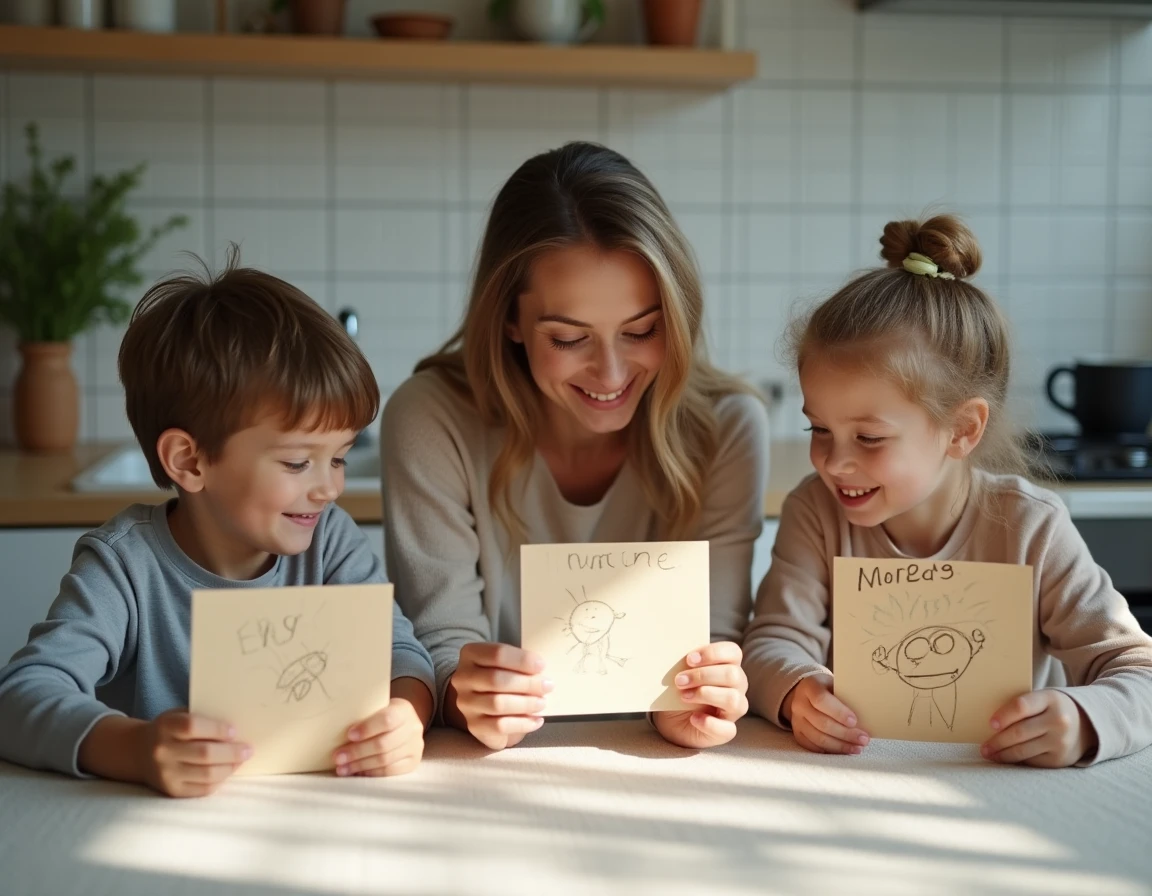
Several studies presented at the French Society of Psychology meetings in 2022 highlight the protective effect of daily micro-rituals on the feeling of family cohesion. Five to ten minutes are enough: a quick card game, a prolonged hug, a shared reading, or a discussion about the best moment of the day.
The value of these micro-rituals lies in their accessibility. They work even in families heavily constrained by work or atypical schedules. The classic trap is wanting to organize a big outing on the weekend to “compensate” for a week without real interaction. An article dedicated to family routine on the Blog Famille site details how these small regular appointments weigh more than occasional events.
The short format removes the barrier of fatigue. A parent who comes home late can still establish a ritual of three questions at bedtime. Regularity takes precedence over duration.
2. Co-constructing the family schedule with children

A report from the OECD published in 2023 on student well-being shows that involving children in co-constructing family schedules improves their sense of autonomy and reduces conflicts around household rules. The principle: choose together a screen-free evening, a chore-free Sunday, a game night, or a themed meal.
This lever acts on two levels. First, the child who participated in the decision respects the rule better because they are not subjected to it. Second, the simple act of discussing the program together creates a moment of exchange that, in itself, already breaks the routine.
Specifically, a weekly family council of fifteen minutes can take this form:
- Each member proposes an activity or a change for the following week
- The group votes or negotiates a compromise (no systematic parental veto)
- The agreed-upon program is displayed in a visible place for everyone to refer to
Field reports vary on the minimum age to involve children, but from four or five years old, a simple choice between two options is enough to produce an effect on engagement.
3. Outdoor outings as a family anti-stress lever

A survey from the UnaFam Family Life Observatory, published in 2024, associates shared outdoor activities with a reported decrease in family stress and improved communication quality between parents and children. Walks, shared gardens, easy hikes: the natural setting modifies interactions because it removes domestic stimuli (screens, ringing phones, visible chores).
Most content on family routine remains focused on the home or the couple. In contrast, simply changing the physical setting shifts conversations. A child who never speaks at the table may become talkative on a forest trail.
The main obstacle remains logistics. For urban families without a car, a park twenty minutes away already provides sufficient change of scenery. The goal is not athletic performance, but the change of sensory environment: sounds, light, textures underfoot.
4. Redistribution of domestic roles to break habits

The family routine feeds on fixed roles: the same parent cooks, the same child sets the table, the same adult manages homework. Inverting these assignments, even temporarily, produces a double effect. The one who discovers an unusual task develops empathy for the one who used to do it. And the one who lets go of their usual task finds mental availability.
This mechanism is not limited to the kitchen. It can involve choosing the evening movie, managing the school commute, or deciding the weekly menu. Redistributing roles forces each member to step out of autopilot.
A common limitation is resistance to change, especially among children accustomed to a stable framework. To avoid tensions, it is better to present the inversion as a temporary game (“this week, we switch”) rather than as a new permanent rule. The provisional nature reduces opposition and maintains a playful aspect.
5. Thematic days without imposed schedules

The opposite approach to structured planning also works. Dedicate half a day or a whole day to a single theme, without a schedule, without a productivity goal. Examples: “fort day” (building a shelter in the living room or garden), “international recipes day” (choosing a country and cooking a dish), “digital silence day” (no screens for anyone).
The theme provides a guiding thread without locking into a rigid program. The difference with a planned outing lies in the absence of time constraints: no reservations, no travel, no waiting in line. Free time structured by a theme unleashes family creativity while avoiding the boredom that drives everyone to their screens.
- Choose the theme together (see point 2 on co-construction)
- Accept that the result may be imperfect: a wobbly fort is better than a passive Sunday
- Document the moment (photo, drawing) to create a shared memory that strengthens the bond
The available data do not allow for precise quantification of the impact of these days on long-term family well-being. What emerges from qualitative observations is that a temporary break from habits is enough to rekindle conversation and complicity among household members, even when daily life resumes its course the next day.