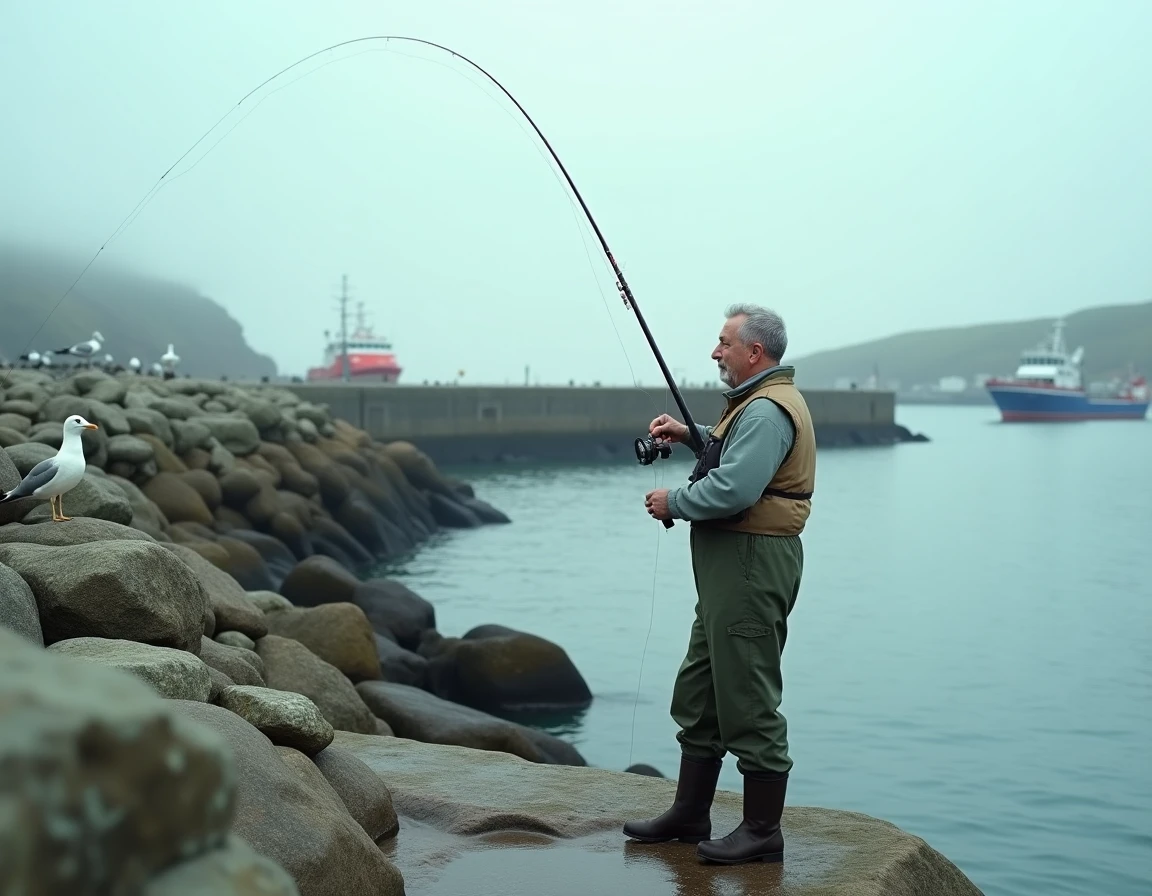
The Guilvinec area features seabed configurations that most guides describe as static “spots.” The issue is different: productive fishing locations along the shore are shifting because coastal species are altering their activity windows due to the warming of Breton waters documented by Ifremer in recent years.
Seasonal Shift of Coastal Species at Guilvinec and Consequences for Spot Selection
Ifremer’s data confirm a significant and continuous rise in surface temperature in southern Brittany, particularly pronounced since 2018. This warming leads to a northward shift of thermophilic species: mackerel appearing later in the season, dorade spotted during unusual time slots, sprats attracting predators to once-rare spots.
For shore anglers, the direct consequence is a shift in the timing of fish entering the intertidal zones and on the jetties. A productive rocky flat in May five years ago may now only come alive in June. It’s better to think in terms of “thermal windows” rather than “fixed spots”: when the surface temperature exceeds a threshold perceived by forage prey, the current-exposed spots become active.
Those who wish to fish from the shore at Guilvinec with Heya will find an updated breakdown of fishing areas that takes these recent changes into account, far beyond fixed spot lists.
Bar Regulation 2024 in Southern Finistère: What Changes for Shore Fishing
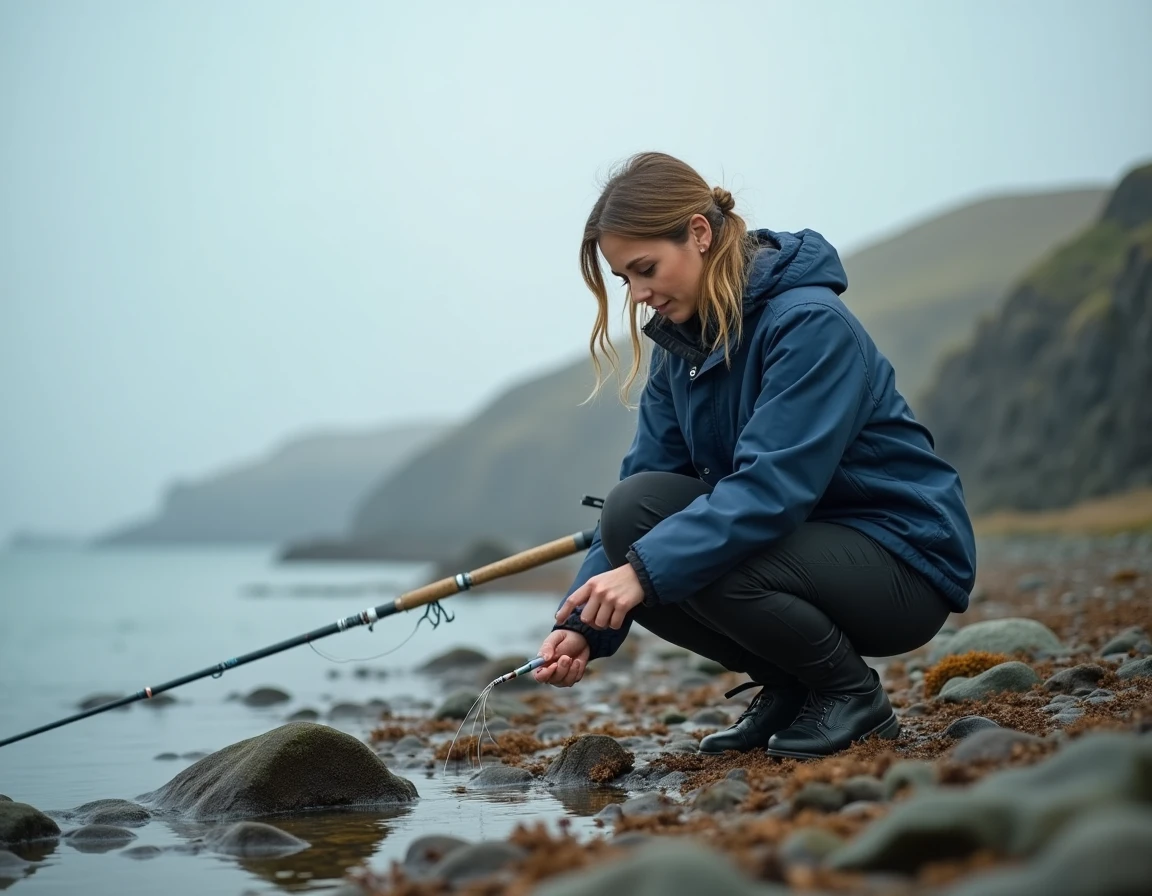
The bar regulation published in the Official Journal at the beginning of 2024 by the Ministry of the Sea imposes constraints that are still too often ignored on the jetties of Guilvinec. Prohibition periods, minimum size, and number of allowed catches apply to recreational shore anglers just as they do to boaters.
The bar remains the most sought-after species along this coastline. Adhering to the regulations is not a matter of optional civility: inspections have intensified in the Bigouden region, and a violation can be costly in fines as well as seized equipment.
Points of Caution for Shore Anglers
- Check each season for specific closure periods in the Channel-Atlantic area, as they change from year to year based on scientific advice from ICES
- Always measure each bar before keeping it: the minimum size applies to the fork length, not the total length, and confusion remains common
- Respect the daily quota per angler, without sharing catches among members of the same group at the spot
None of the analyzed content on the spots of Guilvinec details these constraints operationally. However, understanding the regulations is the first thing to master before choosing a spot.
Current Reading and Spot Selection Between Le Guilvinec and Penmarc’h
The coastline between Le Guilvinec and the tip of Penmarc’h alternates between rocky flats, natural rock formations, and small sandy coves. A marked lateral current at mid-tide is the main criterion for selecting a productive spot for bar fishing. This current creates water veins where the predator lies in ambush, facing the flow, expending minimal energy.
Foot-accessible spots at low tide are not necessarily the best. A widely exposed flat attracts walkers, not fish. Areas where the rock remains partially submerged at low tide, with sufficient residual depth for bar to stay, deserve more attention.
Concrete Criteria for Evaluating a Rocky Spot
- Presence of grooves or faults perpendicular to the shore, which channel the current and concentrate prey
- Mixed rock/sand bottom within casting range, identifiable by visible changes in water color from the shore
- West to southwest exposure, ensuring sufficient mixing even at average coefficients
- Accessible but not too easy: spots requiring a few minutes of walking over rocks experience less fishing pressure
Coastal Protection Zones and Fishing Pressure at Guilvinec
Reserves and restricted zones regulate access to certain sectors of the Bigouden coastline. These perimeters, often marked by discreet signage, restructure the distribution of fishing pressure on the remaining spots. An angler who ignores them risks a fine but also misses out on a beneficial edge.
The immediate surroundings of a protected area often concentrate fish in transit. The bar and sparids that reside in the reserve come out to hunt on accessible edges, particularly during rising tide. Positioning your spot just at the boundary of the restricted zone, on the right side, is a much more effective strategy than searching for a “secret” spot miles away.
Tide Coefficient and Time Slots at Guilvinec
The optimal fishing window is between two hours before and one hour after low tide on the rocky spots in this area, provided the coefficient exceeds the average. Low coefficients do not generate enough lateral current to activate the most interesting spots.
During high coefficients, caution is advised: wetted rocks and backwash waves on exposed flats pose a real danger. An excellent spot on paper is worthless if you cannot stay there safely for the entire duration of the session.
Guilvinec offers a sufficiently varied coastal line to adapt each outing to the day’s conditions. The key remains to couple terrain reading with tide and temperature data, rather than mechanically returning to the same rock all season long.